
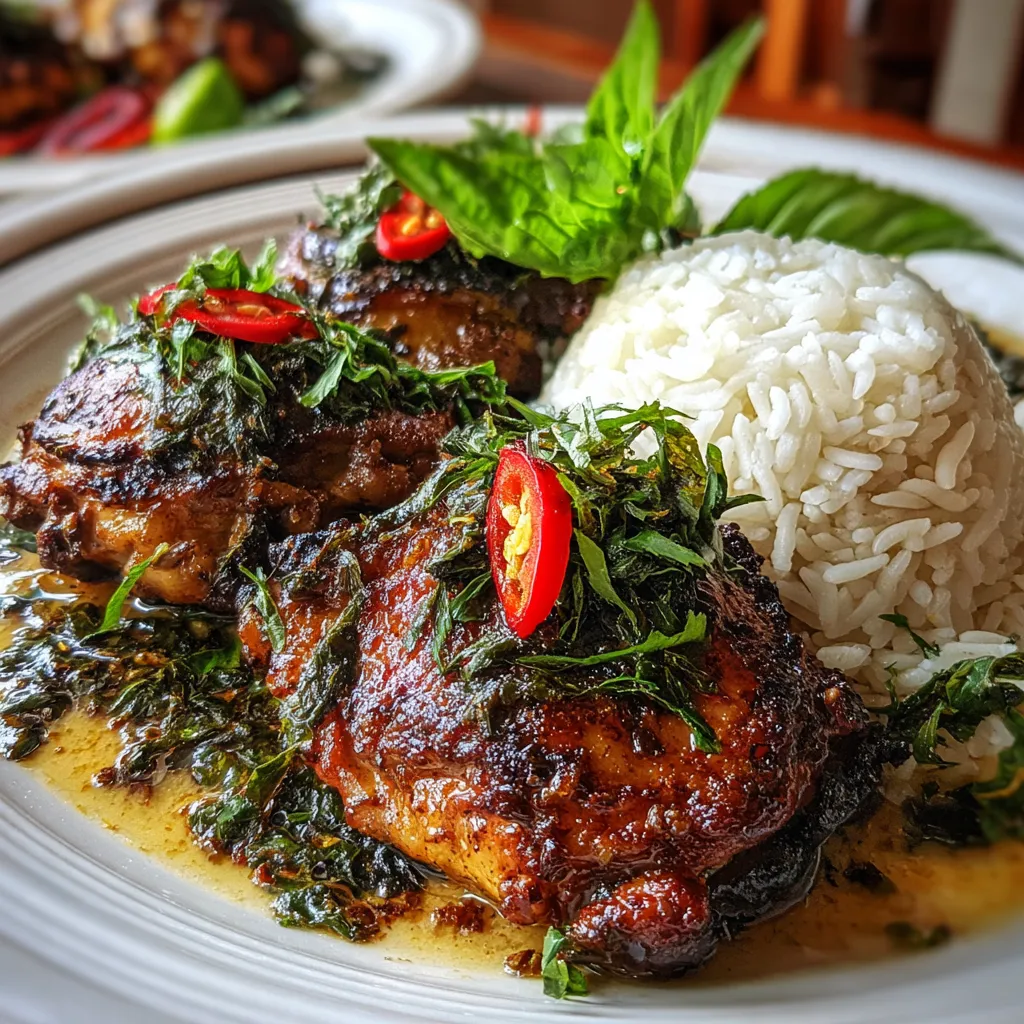
Coconut Basil Chicken brings tender chicken thighs together with creamy coconut milk and fresh basil, brightened by garlic, ginger, and a squeeze of lime. Golden-browned chicken simmers in a velvety broth spiced with fish sauce and a hint of red chili, delivering a satisfying Thai-inspired dinner that's surprisingly easy to whip up.
Key Ingredients
These simple ingredients come together to create a rich and aromatic Coconut Basil Chicken—each plays a unique role in balancing creaminess, heat, and umami.
- 1 lb boneless skinless chicken thighs: Tender pieces that absorb the creamy coconut sauce and remain juicy.
- 2 tbsp vegetable oil: Neutral cooking oil for sautéing the aromatics and browning the chicken.
- 1 medium onion: Adds sweetness and depth when sautéed until translucent.
- 3 cloves garlic: Provides pungent, savory flavor to the coconut broth.
- 1 tbsp fresh ginger: Lends warm, zesty notes and balances the richness.
- 1 can coconut milk: Creates a velvety base that envelops the chicken in creaminess.
- 2 tbsp fish sauce: Brings umami depth and authentic Thai savoriness.
- 1 tbsp soy sauce: Contributes saltiness and color to the sauce.
- 1 tsp sugar: Balances salt and acidity with a hint of sweetness.
- 1 cup fresh basil leaves: Offers herbaceous brightness and fragrant aroma.
- 1 red chili (optional): Adds heat and a pop of color if you like it spicy.
- Juice of 1 lime: Provides refreshing acidity to finish the dish.
How To Make Coconut Basil Chicken
Ready to dive into cooking? These steps will guide you through prepping, sautéing, and simmering to achieve tender chicken bathed in a silky coconut sauce. You’ll use essential techniques like browning the protein, sautéing aromatics, and gentle simmering, then finish with fresh basil and lime for maximum flavor.
1. Slice chicken thighs into bite-sized pieces and set aside. Use a sharp knife to cut into roughly 1-inch cubes, then transfer to a bowl for easy cooking later.
2. Heat vegetable oil in a large skillet over medium heat. Wait until the oil shimmers before adding ingredients.
3. Add chopped onion and sauté until translucent, about 3 minutes. Stir regularly to prevent browning.
4. Stir in minced garlic and grated ginger and cook for 1 minute. Keep the mixture moving to avoid burning.
5. Add chicken pieces and cook until lightly browned on all sides. Use tongs to turn each piece for even color.
6. Pour in coconut milk, fish sauce, soy sauce, and sugar, then stir to combine. Ensure the sugar dissolves completely.
7. Bring mixture to a gentle simmer and cook until chicken is cooked through and sauce thickens, about 10 minutes. Keep the lid off to help reduce the sauce.
8. Stir in basil leaves and sliced chili until basil wilts. Fold gently to preserve the leaf texture.
9. Remove from heat, squeeze in lime juice, and adjust seasoning if needed. Taste and add more fish sauce or lime juice to your preference.
10. Serve hot over steamed rice. Scoop the curry over bowls of warm rice, letting it soak into every grain.
Serving Suggestions
Bring out the best in Coconut Basil Chicken by pairing it thoughtfully. Whether you serve it family-style or plate it for a dinner party, these ideas will elevate every bite.
- Steamed Jasmine Rice: Spoon the hot curry over fluffy jasmine rice to soak up every drop of creamy sauce.
- Rice Noodles: Toss cooked rice noodles with a ladle of the curry for a slurpy, noodle-based meal—warm the noodles first to keep everything silky.
- Fresh Herb Garnish: Top with extra torn basil leaves and cilantro for an herbaceous lift; add thinly sliced red chili for color and spice.
- Lime Wedges: Serve with lime wedges on the side so each person can squeeze bright acidity over their portion just before eating.
Tips For Perfect Coconut Basil Chicken
Getting Coconut Basil Chicken just right is all about the details: boosting the spice level if you like your curry fiery, choosing the perfect basil variety for maximum aroma, pairing it with the right starch, and storing or reheating it in a way that preserves the luscious texture. A few simple tweaks—like swapping in Thai basil or adding a pinch of crushed red pepper—can elevate the dish dramatically. And when it comes to leftovers, gentle reheating keeps the coconut milk from breaking so every spoonful stays silky smooth. Use these friendly pointers to make this Thai-inspired classic your own signature weeknight winner.
- For a spicier dish increase the amount of chili or add crushed red pepper flakes.
- Substitute Thai basil for sweet basil to intensify the flavor.
- This dish pairs well with jasmine rice or rice noodles.
- Reheat leftovers gently to prevent the coconut milk from separating.
How To Store It
After enjoying your Coconut Basil Chicken, you’ll want to keep any leftovers tasting their best. Proper storage preserves its creamy texture, bright basil notes, and balanced flavors. Whether you’re refrigerating for a quick reheat or freezing for future meals, follow these simple methods to maintain that velvety coconut sauce and fresh herb goodness.
- Refrigerate in an airtight container: Let the curry cool to room temperature before transferring to a sealed container. Store for up to 3 days in the fridge.
- Freeze for longer storage: Portion into freezer-safe containers or heavy-duty bags, leaving some headspace. Thaw overnight in the fridge before reheating.
- Gentle reheating: Warm over low heat on the stovetop, stirring occasionally, to prevent the coconut milk from separating.
- Separate rice if freezing: Keep rice and curry in separate containers to maintain the best texture, then reheat them together when ready to eat.
Frequently Asked Questions
Here are some quick answers to help you master Coconut Basil Chicken:
- Q: How long does it take to prepare this recipe?
A: It takes about 40 minutes from start to finish. This includes roughly 10 minutes to slice the chicken and chop the onion, garlic, and ginger, about 3 minutes to sauté the onion, 1 minute to cook the garlic and ginger, 5–7 minutes to brown the chicken, and 10 minutes to simmer the sauce until it thickens.
- Q: Can I substitute chicken breast for chicken thighs?
A: Yes, you can use boneless skinless chicken breast instead of thighs. Because breast meat is leaner, reduce the simmering time by a few minutes and watch closely to prevent overcooking and drying out.
- Q: What can I do if I don’t have fish sauce on hand?
A: You can replace fish sauce with 1–2 tablespoons of soy sauce plus a pinch of salt and a drop of lime juice to mimic the umami and salty depth. Keep in mind the flavor will be slightly less complex.
- Q: How can I adjust the spiciness of this dish?
A: For more heat, add an extra sliced red chili or sprinkle in crushed red pepper flakes during the simmer. To tame the spice, omit the chili entirely or remove seeds before slicing; you can also stir in a little more coconut milk or a teaspoon of sugar.
- Q: My sauce isn’t thickening—what should I do?
A: Continue simmering the sauce over medium-low heat, stirring occasionally to prevent sticking, until it reduces and coats the back of a spoon. If it’s still too thin, mix 1 teaspoon of cornstarch with 1 tablespoon of cold water and stir it into the simmering sauce. Cook for another minute until it thickens.
- Q: How should I store and reheat leftovers?
A: Allow the dish to cool slightly, then transfer it to an airtight container and refrigerate for up to 3 days. Reheat gently over low heat on the stovetop or microwave in short intervals, stirring occasionally to prevent the coconut milk from separating.
- Q: Can I use Thai basil instead of sweet basil?
A: Absolutely. Thai basil has a more pronounced anise-like flavor that intensifies the dish’s aromatic profile. Add it at the same stage in step 8, stirring until it just wilts so it retains some texture.
- Q: What are the best serving suggestions for Coconut Basil Chicken?
A: This dish pairs beautifully with steamed jasmine rice or rice noodles to soak up the creamy coconut sauce. You can garnish with extra fresh basil, a squeeze of lime, and sliced red chilies for a vibrant finish.
What Makes This Special
Coconut Basil Chicken stands out because it combines creamy coconut broth, fragrant basil, and bright lime in one easy skillet meal—perfect for busy weeknights or impressing guests. The umami punch from fish sauce, warming ginger, and optional chili heat make every spoonful a flavor adventure. It’s simple enough for beginners yet versatile for customizing spice levels or swapping in Thai basil. Go ahead and print this recipe for safekeeping, bookmark it for your next dinner, and let me know in the comments if you gave it a whirl or have any questions about making it your own!
Print
Coconut Basil Chicken
- Prep Time: 15 mins
- Cook Time: 20 mins
- Total Time: 35 minutes
- Yield: 4 servings
- Category: Main Dishes
Description
Golden-browned chicken simmers in velvety coconut broth, spiced with garlic, ginger, and fish sauce. Fresh basil and a hint of red chili add brightness, finished with lime juice over steaming rice.
Ingredients
- 1 lb boneless skinless chicken thighs
- 2 tbsp vegetable oil
- 1 medium onion
- 3 cloves garlic
- 1 tbsp fresh ginger
- 1 can coconut milk
- 2 tbsp fish sauce
- 1 tbsp soy sauce
- 1 tsp sugar
- 1 cup fresh basil leaves
- 1 red chili optional
- juice of 1 lime
Instructions
- Slice chicken thighs into bite-sized pieces and set aside.
- Heat vegetable oil in a large skillet over medium heat.
- Add chopped onion and sauté until translucent, about 3 minutes.
- Stir in minced garlic and grated ginger and cook for 1 minute.
- Add chicken pieces and cook until lightly browned on all sides.
- Pour in coconut milk, fish sauce, soy sauce, and sugar, then stir to combine.
- Bring mixture to a gentle simmer and cook until chicken is cooked through and sauce thickens, about 10 minutes.
- Stir in basil leaves and sliced chili until basil wilts.
- Remove from heat, squeeze in lime juice, and adjust seasoning if needed.
- Serve hot over steamed rice.
Notes
- For a spicier dish increase the amount of chili or add crushed red pepper flakes.
- Substitute Thai basil for sweet basil to intensify the flavor.
- This dish pairs well with jasmine rice or rice noodles.
- Reheat leftovers gently to prevent the coconut milk from separating.